Ashland City sits in bottomland on the northeast bank of the Cumberland River, with residential districts built on hills rising north of the flood plain. Flash flooding in February 2016 and again on February 23, 2019 put water on Main Street and other roads. Roads are one thing; the question for a homeowner is what happens when that water reaches a door.
Key takeaways
- The town sits in Cumberland River bottomland, so low spots collect water after heavy rain.
- In February 2016, Fairgrounds Road, Chestnut Street, Duke Street, Brook Hollow Road and Main Street flooded.
- On February 23, 2019, water covered Main Street near Highway 49, and Tennessee Waltz Parkway was flooded and closed.
- Flash flood water is treated as Category 3, so porous materials are removed and the structure is dried.
- The National Weather Service publishes river hydrographs for the Cumberland River and for Sycamore Creek, which show when levels are rising.
Where the water comes from
Ashland City is near the center of Cheatham County, on the northeast bank of the Cumberland River. The river lies upstream from where it meets the Harpeth River, and Cheatham Lake extends up the Cumberland past the town.
Sycamore Creek runs just north of town. Heavy rain on any of these waters, or on the ground between them, can put water where it does not belong.
The town's geography explains much of this. Residential districts sit on hills north of the flood plain, so the hills and the bottomland are very different places to own a house.
Flash floods on record
Two events show how fast the town's roads can go under. Neither one proves a particular house took water, but both show the pattern.
May 2010 is the larger memory. Flooding along the Cumberland put the town among the areas under muddy water, and flooding on the Harpeth River broke the 1948 flood record.
February 2016
A National Weather Service storm survey described significant flash flooding around Ashland City. Fairgrounds Road, Chestnut Street, Duke Street, Brook Hollow Road and Main Street flooded.
One person was rescued from a vehicle on Harris Town Road near Lockertsville Road. Floodwaters also surrounded the sewage treatment plant.
February 23, 2019
A social media report said water was flowing over Main Street near Highway 49 and the road was impassable. Law enforcement reported Tennessee Waltz Parkway flooded and closed.
How flash flood water reaches a house
Water follows slope. It collects in low yards, runs down driveways and pushes against doors and garage openings.
Even a few inches of water at a door can ruin a floor. Water standing against a wall wicks up the drywall far higher than the waterline, so the visible depth understates the damage.
- Low doorways and garage doors take water first.
- Floor drains and utility rooms can fill from below.
- In a home with a raised floor, water can collect in the space underneath.
- Water that stands against a foundation wall finds cracks and seams.
- Outbuildings and sheds near the low ground flood before the house does.
First steps before help starts
Safety comes ahead of cleanup. Moving water, even shallow, can carry a person or a car, and no one should wade through it.
- Stay out of the water until the power to the area is off.
- Photograph the waterline on each wall before anything moves.
- Lift valuables, papers and electronics onto dry shelves.
- Note the date and time the water came in and when it began to drop.
- Switch off power at the panel only if it is dry and easy to reach.

Pumping out the low areas and under the floor
Truck-mounted units handle water extraction in rooms and garages. Under a raised floor, crawl space water removal uses pumps to clear the space, then the wet insulation comes out and the joists are dried.
A technician checks under the house after heavy rain and does not assume a crawl space or basement. Not every home has either, and the plan depends on what is actually there.
In a home with a raised floor, the first sign is often a cold, damp floor or a smell, not a visible puddle. A look under the house after a flood is the only way to know.
- Standing water is pumped and the space is checked for remaining pockets.
- Wet insulation under the floor is pulled.
- Joists and subfloor are measured and dried.
- Vapor barriers and vent openings are checked before the space is closed.
Cleanup and drying after flood water
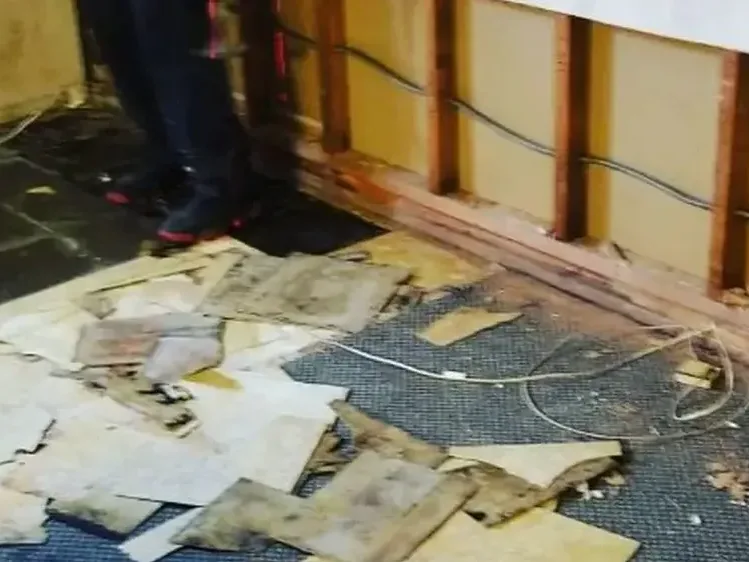
Flash flood water is handled as Category 3. The work follows the rules for flood and flash flood cleanup: remove what flood water ruined, clean and treat surfaces, then dry.
To follow river and creek levels, the National Weather Service publishes hydrographs for the Cumberland River at the town and for Sycamore Creek nearby. They are a useful check when rain is heavy and the ground is already wet.
For the wider picture of local service, see the Ashland City water damage pages.
- Porous materials that soaked in flood water are discarded.
- Drywall is cut above the wet mark.
- Hard surfaces are cleaned and treated.
- Air movers and dehumidifiers run until readings return to a dry reference.
Planning before the next heavy rain
Flooding on the roads in 2016 and again in 2019 is a reminder that the next heavy rain will test the same low spots. A few steps on a dry day make a wet one easier.
- Know which side of the house water would reach first.
- Move stored items off the floor in garages and low rooms.
- Clear storm drains and gutter outlets near the house.
- Photograph the house and garage while everything is dry.
- Keep the contact for a local water damage crew where the whole household can find it.
Questions
Does a flooded road mean my house took water?
Not by itself. Road flooding shows that water reached that spot. Whether it entered a home depends on the slope, the doors and the drainage around it.
Why is flash flood water Category 3?
It runs over roads, soil and drains before it reaches a building, so it can carry bacteria and other contaminants. That is why porous materials are removed.
What if water collects under the house?
Water under a raised floor is pumped out, wet insulation is removed and the joists are dried. A technician checks what the space actually is before planning the work.
How can I follow river levels in town?
The National Weather Service publishes river hydrographs for the Cumberland River and for Sycamore Creek near the town.
How long does drying take after a flash flood?
Often several days, and longer for dense materials such as framing and concrete. Moisture readings decide when drying ends.
Should I wait for the water to go down before calling for help?
No. Calling can happen while water is still up. Extraction begins once the area is safe and the power is off, and the crew plans around road conditions.