Water Extraction and Removal in Madison, TN
Standing water in a Madison home keeps soaking pad, drywall and subfloor until it is pulled out. The extraction crew sets truck-mounted units and floor wands, removes the bulk water, then hands the rooms to the drying team.
(888) 849-5796Water pooled across the floor? Get the wand on it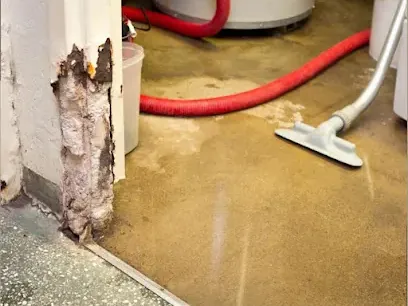
What does water extraction and removal cost in Madison, TN?
Water extraction and the drying that follows typically run $500 to $8,000 or more. The water category, square footage, whether carpet and pad can be saved, and how quickly the extraction crew started decide where a job lands.
One room, clean water
$500 to $1,500- Single room extraction
- Carpet pad assessed
- Drying set the same visit
Several rooms
$1,500 to $4,000- Multiple rooms and a hallway
- Pad removal where needed
- Air movers and LGR units
Whole floor or dirty water
$4,000 to $8,000+- Category 2 or 3 water
- Flooring removal
- Full structural drying
Ranges are typical, not a quote: water category, square footage, material class and how fast drying started move the number most. Try the water damage cost calculator for a closer planning range.
What to do first when water extraction and removal starts
Shut off the water
Close the main or the fixture valve so no new water reaches the floor.
Kill power to wet rooms
Switch off breakers from a dry panel and stay clear of wet outlets and cords.
Move what you can
Lift rugs, electronics and boxes onto dry furniture or upper shelves.
Take photos first
Photograph the water level and damaged items before anything is moved out.
How water extraction and removal is handled, step by step
- 1
Assess
Set the water category and find the deepest point.
- 2
Extract
Truck-mounted and portable units pull the bulk water.
- 3
Map
Meters and thermal imaging trace what is still wet.
- 4
Dry
Air movers and dehumidifiers run until readings are dry.
Extraction is the step that decides how long everything else takes. Every gallon left on the floor has to be evaporated later, and liquid water pulled out by a wand leaves the building far faster than water dried out of the air.
How standing water is extracted from a home
The extraction crew starts at the deepest point and works back toward the door. Truck-mounted units handle large volumes, and portable extractors reach upstairs rooms, closets and tight hallways. On carpet, a weighted extraction tool presses water out of the pad so the carpet can often be saved.
- Hard floors: squeegee wands and pumps for standing water
- Carpet and pad: weighted extraction, then a decision on the pad
- Crawl spaces: submersible pumps before any drying starts
What happens after the water is out
Once the floor is clear, the tech who did the walkthrough maps moisture in walls, baseboards and subfloor. That map sets where air movers and dehumidifiers go for structural drying, and it goes into the claim file.
Why fast extraction matters in brick ranch homes
Many midcentury ranch homes sit over a crawl space, so water that stays on the floor finds the gaps at the walls and drips onto joists and insulation below. Pulling it fast keeps a one-room loss from becoming a crawl space job.
Outside references: Ready.gov flood safety and Tennessee Department of Commerce and Insurance.
- Water category and class of loss set on day one
- Moisture map and dry reference readings before drying
- Daily moisture and psychrometric logs
- Equipment out only when readings are within 2 to 4 points of dry
Water on the floor right now? The extraction crew runs 24/7 across both ZIP codes.
(888) 849-5796Send the extraction crewWater Extraction and Removal in Madison: common questions
How quickly should water extraction start?
As soon as possible. Within the first day, water moves into pad, baseboards and drywall, and after 24 to 48 hours growth can begin on wet materials. Dispatch runs 24/7 for that reason.
Can wet carpet be saved after water extraction?
Often, when the water is clean and the carpet is extracted early. The pad usually goes, because it holds water like a sponge. Carpet touched by sewage or floodwater is removed.
Is a shop vac enough for standing water?
It helps with a small spill, but it cannot pull water out of pad or subfloor. Truck-mounted extraction removes far more water per pass, which shortens drying time.
Does water extraction include drying?
Extraction removes the liquid water. Drying is the next step: air movers and dehumidifiers run until meters show the materials are back to a dry reference.
What does water extraction cost here?
Most jobs land between $500 and $8,000, set by the water category, the square footage and whether flooring has to come out.
Related water damage services
Water extraction and removal across Madison and northeast Nashville
Madison Water Damage Restoration covers ZIP 37115 and 37116, from the historic downtown and Amqui Station along Gallatin Pike to Rivergate and the Motor Mile, out to Marlin Meadows, Neelys Bend Road, Dickerson Road and Old Hickory Boulevard.
Nearby coverage reaches Inglewood, East Nashville, Old Hickory, Goodlettsville, Hendersonville, Whites Creek.
Standing water inside? Get it pulled before it soaks in.
Every hour on the floor sends water deeper into pad, drywall and subfloor. Truck-mounted extraction stops that.