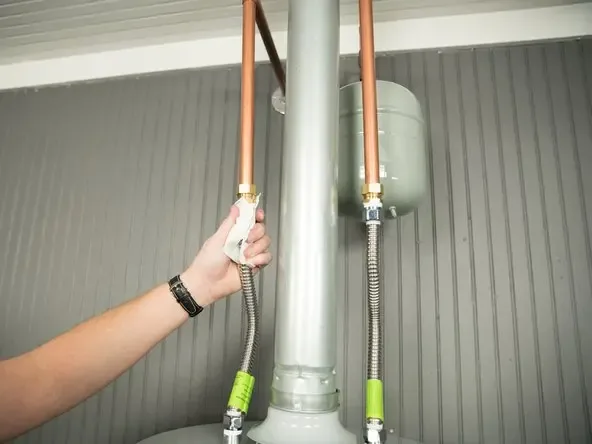
A tank water heater holds enough water to soak a closet floor and the walls around it quickly. In Greenbrier, where the homeownership rate was 79.3% in 2024, the person standing in the puddle is usually the owner, and both the repair and the cleanup are theirs to arrange.
Key takeaways
- Shut off the cold-water valve at the heater and turn off the power or gas before touching anything wet.
- A tank that leaks from its body is replaced, not repaired.
- Where the heater sits decides where the water goes: a closet sends it into walls, a garage across the floor.
- Standing water comes out first, then walls, floors and insulation are checked with moisture meters.
- A gas smell is an emergency that comes before any cleanup.
Stop the water and make the area safe
The first minute matters more than any other. Cutting the supply to the tank and the energy to the burner or element keeps a bad leak from getting worse.
Do not try to drain or move a heavy tank alone while it is leaking. Water and a hot tank together are a burn and slip risk.
- Close the cold-water valve on the pipe above the tank.
- Switch off the electric breaker for an electric heater, or the gas valve for a gas heater.
- If there is a gas smell, leave the house and use the gas provider's emergency contact or 911 before anything else.
- Keep people and pets out of the water.
- Do not touch outlets or cords standing in the pool of water.
- Towel or mop standing water near the tank only after the power is off.
Where the water goes depends on where the tank sits
A homeowner often sees only the puddle on the floor. The real damage is in what the water reached on the way.
Closet or hallway tanks
A tank in a closet sends water under the door and into the wall framing. It can reach the room next door before anyone notices.
Baseboards, flooring and the bottom of the drywall are the usual casualties.
Garage or utility room tanks
In a garage, the water spreads across the floor and soaks boxes, stored items and the bottom of the walls. Hard floors dry well once the water is out, but anything porous stays wet.
Attic or upper floor tanks
A tank on an upper floor sends water through the floor and into the ceiling below. The stain on the lower ceiling is often the first sign anything went wrong.
These cases can need ceiling drywall and insulation removed as well as floor drying.
Why a tank leak means a new tank
A tank holds water in a steel shell with a protective lining. When the shell corrodes or a seam opens, there is nothing to patch.
A leak at a fitting or the relief valve may be fixable, but a leak from the body of the tank is the end of that tank.
The data label on the tank shows how old it is, and a tank near the end of its life is the one most likely to fail suddenly. A homeowner can read the label at a glance.
- Rust streaks at the base or sides of the tank.
- Water at the bottom that keeps coming back after it is wiped up.
- A relief valve that drips regularly.
- A tank that rumbles or pops when it heats.
What the cleanup removes and dries
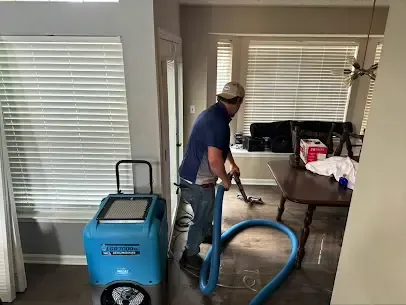
A crew handling water heater leak cleanup starts with water extraction to remove the standing water, then checks how far the moisture traveled.
Readings on the wall, the floor and the framing show what has to open and what can stay.
Thermal cameras and moisture meters show where the water went behind the surface. They decide how much material opens, which keeps the removal as small as it can safely be.
- Baseboards are removed so the wall cavity can dry.
- Wet drywall at the bottom of the wall is cut out when saturated.
- Wet insulation is pulled and replaced.
- Vinyl or laminate flooring may be lifted so the subfloor can dry.
- Air movers and dehumidifiers run until the readings are dry.
An owner's checklist after the leak
Greenbrier counted 2,393 households in 2020, and with most homes owner-occupied, the owner decides the order of repairs. A short list keeps the steps in the right order.
- Photograph the tank, the water and the wet surfaces before cleanup.
- Have a plumber replace the tank once the area is safe.
- Keep receipts for the new tank and any emergency work.
- Read the home policy to see how it treats a sudden tank failure.
- Ask whether a drain pan is worth adding under the new tank.
Questions to ask before the cleanup starts
A few direct questions keep the job clear and the scope fair. Any restoration crew should be able to answer them in plain language.
- Which rooms will be opened, and why?
- How will wet materials be handled and disposed of?
- What readings show the job is finished?
- How long will equipment run, and who removes it?
Catching the next leak early
A water heater gives warning signs before it fails: rust, drips and strange sounds. Look at the base of the tank every few months.
The median property value in the city of Greenbrier was $321,900 in 2024, and a wet wall behind a closet can quietly cost much more than a new tank if it is left alone. A look at the water heater leak cleanup process shows why quick action pays.
Keeping the heater area clear helps too. Boxes stacked against a tank hide leaks and soak up water that would otherwise show on the floor.
Questions
Should I shut off the water or the power first?
Do both, in the order that is fastest and safest. Close the cold-water valve to stop new water, then switch off the breaker or gas valve. If there is a gas smell, leave the house first.
Can a leaking water heater be repaired?
A leak at a valve or fitting can sometimes be repaired. A leak from the tank body means the tank has failed and needs replacing.
How far can the water travel?
In a closet, under doors, into walls and into the next room. In a garage, across the whole floor. Moisture readings show the real reach.
Is a water heater leak covered by homeowners insurance?
It depends on the policy and the cause. Some policies cover sudden water damage but treat the tank itself differently, so read the wording or ask the insurer.
How long does it take to dry out after a tank leak?
Usually a few days, depending on how long the water sat and which materials got wet. Readings decide when equipment can come out.
Is it safe to keep using hot water after a small leak?
A leaking tank should be shut off until a plumber has looked at it. Small leaks can turn into large ones without warning.