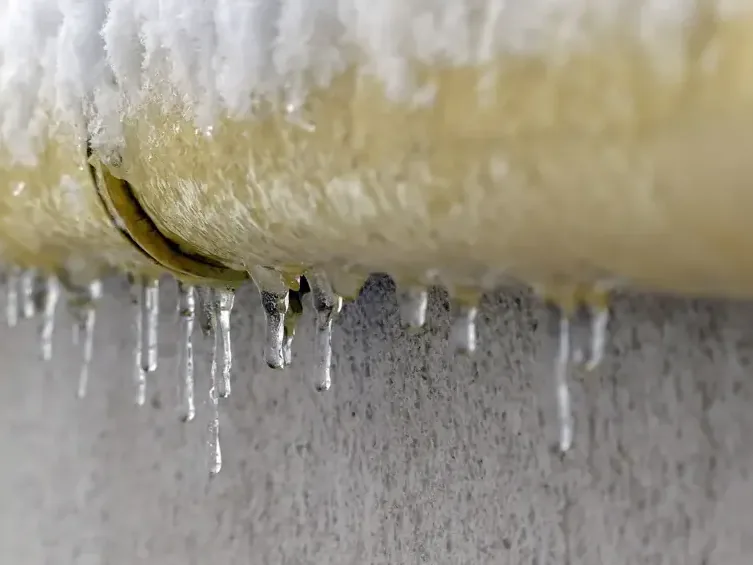
At the Nashville airport, the low drops below 32 degrees on about 71 nights a year. For a Madison home, a few of those nights are enough to freeze a pipe in an exterior wall, a garage or a crawl space.
Key takeaways
- Nashville sees about 71 nights a year with a low below 32 degrees, so freeze prep belongs on the fall checklist.
- A frozen pipe often splits without leaking, then floods the space once the ice melts.
- Pipes in exterior walls, garages and crawl spaces freeze first.
- Learn where the main water shutoff is before a freeze, not during one.
- If a pipe splits, shut off the water, deal with power near wet areas and start extraction.
Why a freeze becomes a flood after the thaw
Water expands as it turns to ice, and a pipe has little room to give. The pipe often splits along a seam or at a fitting, but the ice can plug the crack for a while.
The leak starts when the ice melts. A pipe that split on a cold night may send water into a wall hours or days later, often when no one is watching.
A hard freeze followed by a mild afternoon is the pattern that exposes a split. The ice melts, the pressure returns and the water goes wherever the crack points.
That delay is what makes frozen pipe losses large. By the time a stain shows on a ceiling, the cavity behind it has been soaking for some time.
Where pipes freeze first
Cold reaches a pipe through whatever separates it from the outdoors. The pipes with the thinnest protection freeze first.
Madison includes older brick ranch neighborhoods such as Marlin Meadows, where the homes were built primarily between 1952 and 1959. Age alone does not mean a pipe will fail, but old fittings and past repairs deserve a look before the cold.
- Supply pipes in exterior walls, especially on the shaded side of the house.
- Pipes in a garage, a crawl space or any unheated utility area.
- Outdoor spigots and the pipes that feed them.
- Pipes under a kitchen or bathroom sink on an outside wall.
- Water heater supply and drain connections in a cold garage.
Prepare the house before the first hard freeze
A little work in October costs far less than a wall opened in January. A short pipe freeze risk check helps rate a home before the cold arrives.
Outside the house
Disconnect garden hoses and, where an indoor valve feeds an outdoor spigot, shut that valve off. Cover or insulate any exposed pipe.
- Drain outdoor hoses and store them.
- Seal gaps where pipes enter the house from outside.
- Close garage doors on cold nights.
Inside the house
Keep the heat on and steady, even when the house is empty. A cold house is a house with cold pipes.
- Open cabinet doors on cold nights so warm air reaches pipes on outside walls.
- Let a faucet drip slowly when the forecast is hard.
- Wrap pipes in garages and crawl spaces with foam sleeves.
- Find the main water shutoff and make sure it turns.
If a pipe splits: the first moves
Speed matters more than anything else once water is running inside a wall. These steps cut the damage while help is on the way.
Do not wait for a plumber before shutting off the water. The valve is the one fix any household can do in seconds, and it often decides whether the loss is a bucket or a room.
- Shut off the main water valve.
- If water is near outlets, appliances or the panel, switch off power to that area only if the panel is dry and reachable.
- Photograph the damage and the wet surfaces before anything is moved.
- Move furniture and rugs away from the wet area.
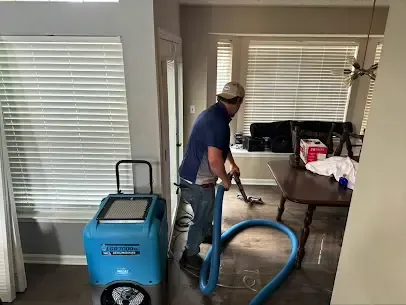
- Start removing standing water and call the local crew for extraction.
Homes that sit empty through a cold snap
A split pipe in an occupied house usually gets noticed. In a house that is empty for a week, the water can run the whole time.
Travel, a vacant rental or a second home all fall into this group. A few small steps before leaving cut the risk a lot.
- Keep the heat on at a steady setting, not turned all the way down.
- Ask a neighbor or friend to walk through during a freeze.
- Shut off the main water valve if the house will be empty for long.
- Leave cabinet doors open under sinks on outside walls.
What cleanup and drying involve
The crew starts with water extraction to remove standing water, then checks walls and floors with moisture meters.
A wall that held a split pipe is often opened at the bottom so air can move through the cavity. Wet insulation is removed, because it holds water against the framing.
Air movers and dehumidifiers then run until readings come close to a dry reference. Frozen pipe water damage work ends when the readings say so, not when the surface feels dry.
Keep the daily moisture readings and the photos together. They show what was wet, what was removed and when the structure reached a dry reading.
- Ceiling drywall under a split is cut out when it is saturated.
- Cabinet bases and baseboards come off so wet cavities can dry.
- Hardwood and laminate may need to be lifted if water got underneath.
Signs a pipe has already split
The longer a pipe ran before someone noticed, the more of the structure is wet. That is why a burst pipe found early costs less to dry than one found late.
Check the cold parts of the house after each freeze, and again once the weather warms.
- Water pressure that drops at one fixture.
- A stain or bubble on a ceiling or wall that was dry last week.
- The sound of running water when nothing is on.
- An unexplained jump in the water bill.
Questions
How cold does it have to get for pipes to freeze?
Pipes in unprotected spaces can freeze when temperatures stay below 32 degrees for a stretch, and wind makes exposed pipes worse. The more exposed the pipe, the less cold it takes.
Should I let faucets drip on cold nights?
On the coldest nights, a slow drip at faucets fed by exposed pipes keeps water moving and relieves pressure. It is a cheap precaution that lowers the risk, not a promise that nothing will freeze.
Is a frozen pipe covered by insurance?
That depends on the policy and the cause. Many policies treat a sudden pipe break differently from a slow leak, so ask the insurer and keep photos and moisture readings.
Can a frozen pipe that has not split be left alone?
A frozen pipe should be thawed slowly with gentle warmth, never an open flame, and a plumber should check it. Leaving it can mean a split when the ice melts.
How long does drying take after a pipe split?
Often a few days for walls and floors, and longer for dense framing. Moisture readings decide when the equipment can leave.
What should I do before leaving town in winter?
Keep the heat on, shut off the main water valve if the stay is long, open cabinet doors on outside walls and ask someone to check the house during a hard freeze.