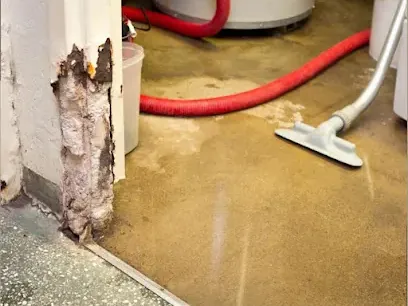
In March 2021, Radnor Lake reported over 10 inches of rain over a three day period during widespread flooding across Middle Tennessee. Most of the lake lies in Oak Hill, and on March 28 four park facilities flooded. The recovery that followed is a clear picture of how heavy rain moves through a building.
Key takeaways
- Several days of steady rain can flood buildings that never had trouble in a single storm.
- Four Radnor Lake facilities flooded in March 2021: a ranger residence, the Walter Criley Visitor Center, the education center and the maintenance shop.
- Park staff began cleanup at sunrise on March 28, because speed limits how far water spreads into materials.
- Standing water comes out first, then flood-damaged materials are removed and the structure is dried.
- The reports describe park facilities, and the same sequence applies to any building where rain-driven water gets in.
What happened at Radnor Lake in March 2021
Radnor Lake reported over 10 inches of rain over a three day period during the March 2021 flooding in Middle Tennessee. On March 28, the lake flooded four facilities: a ranger residence, the Walter Criley Visitor Center, the education center and the maintenance shop.
Otter Creek Road at the lake had extensive damage, including newly paved parking on the west side. Park staff began cleanup at sunrise.
The Radnor Lake Dam was inspected on Monday, March 29 by the state dam inspector and found to be working as designed.
Most of Radnor Lake State Park is in Oak Hill. The reports describe park facilities, and this post makes no claim about any house in the city.
Why days of rain do more than one hard storm
A short downpour mostly runs off. Days of steady rain saturate the ground until the water has nowhere left to go, and then it finds the lowest openings in a building.
That is the pattern behind many Middle Tennessee floods. The last inch of rain does the damage because the first inches already filled the soil.
Once the ground holds all it can, rain that would normally soak in runs along the surface toward whatever is lower. Low rooms, garages and ground floors are where it ends up.
- Doors, floor drains and utility rooms take water first.
- Wall bases and floor coverings soak it up next.
- Equipment stored low, such as a furnace or a freezer, is often the first loss.
- Water that sits for a day or more reaches framing and subfloor.
The recovery sequence: extraction first
The opening stage of a flood cleanup is mostly decisions, not equipment. Is the power off, is the water still moving, and is anyone standing in it?
Those answers come before the pumps do.
The park crew started at sunrise, and that timing is the model. Every hour that water stays in a building, it travels further into the materials.
The standard order is the same for any flooded building: make the space safe, remove the standing water, remove what cannot be saved, then dry what remains. Water extraction with truck-mounted units handles the first part.
- Check that power to the flooded area is off before anyone walks in.
- Photograph the waterline and the damage before anything moves.
- Pump or extract the standing water.
- Remove mud and silt before it dries into a crust.
- Move wet contents out so the floor can be reached.
Flood water and what gets removed
Water that has run across the ground and into a building is treated as Category 3. The plan is contaminated-water cleanup, the kind covered under flood and flash flood cleanup.
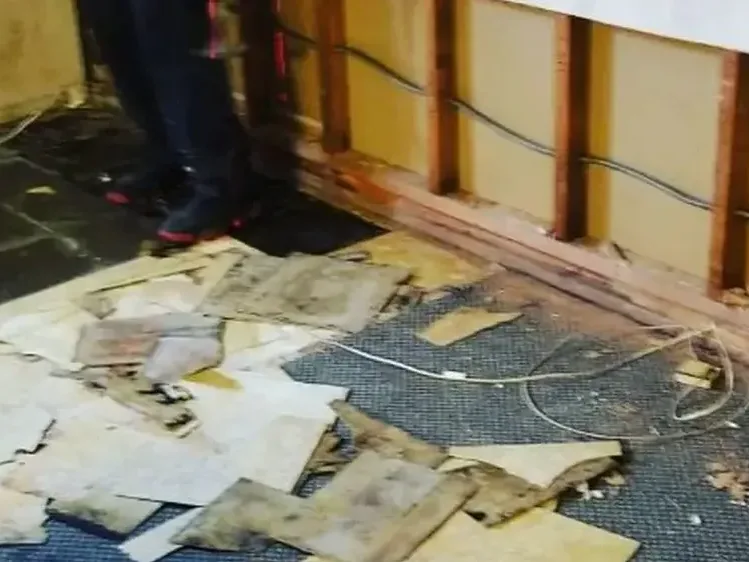
That changes what is saved. Porous materials that soaked in flood water are removed instead of dried in place.
Cabinets are a judgment call. Solid wood bases that touched flood water may be cleaned and dried, while particleboard that swelled is usually replaced.
Measurements decide, not appearance.
- Carpet and pad are discarded.
- Drywall at the bottom of walls is cut off above the wet mark.
- Wet insulation in wall cavities is pulled.
- Cabinets and trim are checked, and many are removed.
- Hard floors are cleaned, treated and dried.
Drying the structure after the pump-out
Drying matters as much as extraction. Structural drying uses air movers, dehumidifiers and moisture meters until the readings return to a dry reference.
What dries slowly
Concrete, framing and subfloor hold moisture longer than drywall. A floor can feel dry on top and still hold water below the surface.
How the crew knows it is done
Readings are taken on the same spots day after day. The equipment leaves when those spots match the dry reference, not when the room feels comfortable.
Why humidity control matters
A wet wall releases moisture into the room air, and humid air slows drying everywhere in the building. Dehumidifiers pull that water out so the materials can keep releasing theirs.
Steps the park took that any owner can copy
Three decisions at Radnor Lake stand out, and each carries over to a home or a business.
None of them needs special equipment. They need a plan and a willingness to act on the first day.
- Start early: cleanup began at sunrise on March 28, the day the facilities flooded.
- Check the structure: the state dam inspector looked at the dam on March 29, so no one had to guess.
- Keep services running: portable toilets were provided while the visitor center restrooms were closed for replacement of septic pumps.
Reading the lesson for any building
Radnor Lake is a state park, but the pattern fits any building: heavy rain, fast cleanup, safety checks and then drying. Owners can prepare for the pattern before the next wet week.
For the wider picture of local service, see the Oak Hill water damage pages.
- Clear gutters and downspouts so roof water leaves the building.
- Know where the water shutoff and the breaker panel are.
- Photograph a dry, clean space as a baseline for any later claim.
- Keep valuables and records off the floor in low rooms.
Questions
Did the Radnor Lake Dam fail in March 2021?
No. The state dam inspector checked it on Monday, March 29 and found it working as designed. The flooding followed the heavy rain.
Does this mean Oak Hill homes flooded?
No. The reports describe damage to park facilities. The event is used here to show how heavy rain affects a building, and it makes no claim about any house.
Is rain water that enters a building clean?
No. Water that has crossed the ground before entering is treated as Category 3, because it can carry soil and contaminants.
How quickly should extraction start?
As soon as the space is safe to enter. The longer water stays, the deeper it soaks into drywall, pad and framing.
How long does drying take after a rain flood?
Often several days, and longer for dense materials. Readings decide when drying is finished.
How is flood water different from a burst pipe leak?
A burst pipe usually starts as clean supply water, Category 1. Flood water is Category 3 from the start, so it calls for removal of porous materials and treated surfaces, not just drying.