In late April 2026, a National Weather Service confirmed EF1 tornado passed south and southwest of Ridgetop in the early morning, with winds up to 95 mph. It snapped hundreds of trees, and heavy downpours soaked Middle Tennessee that Monday and Tuesday night. A roof that lost a shingle or a flashing seam in a storm like that can leak long after the sky clears.
Key takeaways
- A tornado storm can loosen shingles, flashing and vents that only leak on the next rain.
- Water usually reaches attic insulation first, then ceiling drywall, then wall cavities.
- A stain on an upper-floor ceiling is a late sign, since the attic above has been wet longer.
- Wet insulation is removed, while framing and drywall are measured and dried.
- Photograph the damage before anything is moved and keep records for the insurer.
What the April 2026 storm period shows
The tornado touched down at 2:28 a.m. and lifted two minutes later, according to the National Weather Service. Its path straddled the Davidson and Robertson county border, snapped hundreds of trees and damaged five barns and outbuildings just west of Browns Lake.
Ridgetop is a city in Davidson and Robertson counties, and no one can say from the record which roofs were hit. What the storm does show is how wind and hours of rain test every roof detail at once.
Soaking downpours hit Middle Tennessee on the Monday and Tuesday nights of that storm period. A roof faced wind first and long rain second, which is the order that turns a small opening into a wet attic.
Ridgetop had 898 housing units at the 2020 census, so even a narrow storm path puts a lot of roofs in play.
How a storm-damaged roof leaks
Wind rarely tears a roof off. More often it lifts a few shingles, bends flashing or cracks a vent boot, and the opening is small enough to miss from the ground.
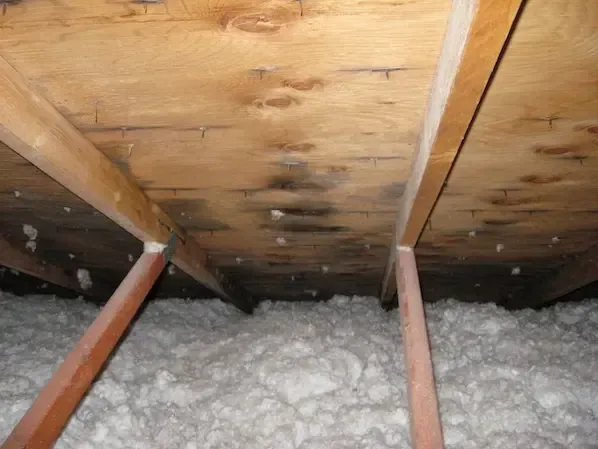
Attic insulation matters here. It acts like a blotter, drawing water sideways across the attic floor, so a leak in one corner can stain a ceiling in another.
Where water gets in
A falling limb can also puncture the roof surface. In a storm that snapped hundreds of trees, limbs are a real risk.
A roof that was patched before the storm is another weak point. Old repairs often fail first.
- Lifted or missing shingles.
- Bent or loose flashing around chimneys, vents and skylights.
- Cracked ridge caps and vent boots.
- Punctures from branches.
- Gaps where a branch rubbed or lifted the roof edge.
Where the water goes
Water drips onto attic insulation, which soaks it up like a sponge. From there it spreads to the top of the ceiling drywall and runs down inside wall cavities.
By the time a brown stain shows on the ceiling, the attic has often been wet for days.
Signs to look for after a storm
Check the day after the storm, and again after the next heavy rain. A roof that held during one downpour may not hold in the next.
A quick look from the ground can help too. Missing shingles, curled edges and bent metal at vents are often visible without climbing up.
- Brown or yellow stains on a ceiling.
- Ceiling drywall that sags or bubbles.
- Peeling paint near a ceiling corner.
- A damp smell in a bedroom closet or upstairs hallway.
- Daylight or wet spots when looking up in the attic.
- Water dripping from a light fixture or bathroom fan.
- A musty smell that gets stronger after rain.
Why speed matters with a roof leak
Wet insulation and drywall stay damp for days when left alone. Lasting harm to framing and finishes can begin within 24 to 48 hours.
Waiting for the stain to grow is the costly choice. A small leak found early may mean one section of ceiling instead of a whole room.
- Put a bucket under active drips and move belongings out of the way.
- Mark the edge of each stain with a pencil and a date to see if it grows.
- Keep the attic accessible so the crew can check it.
What gets removed and what gets dried
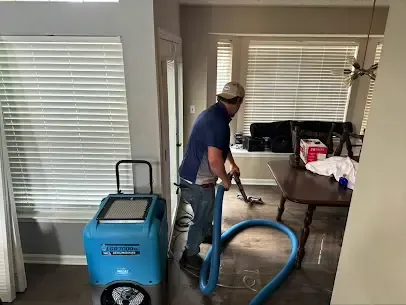
A crew handling roof leak water damage starts by finding how far the water traveled, using moisture meters and, when needed, an opened ceiling.
Insulation that is soaked is bagged and removed, since drying it in place leaves moisture against the framing.
Ceilings are opened in sections, not all at once. The crew cuts back until readings under the drywall match a dry reference, then stops, which keeps the repair as small as it can safely be.
- Wet attic insulation is removed.
- Saturated ceiling drywall is cut out in sections.
- Framing and roof sheathing are measured and dried.
- Wet flooring or carpet below the leak is dried or lifted.
Drying the structure and protecting it from the next rain
Air movers and dehumidifiers run until the readings return to a dry reference. This is the work covered by structural drying, and it can take several days.
Notes help as much as photos. A dated log of when stains appeared and when it rained gives the insurer a clear timeline of the loss.
The roof comes first or at least gets temporary cover. Otherwise the next rain wets the dried area again, and the drying starts over.
Equipment placement follows the water. Dehumidifiers condition the whole room, while air movers and drying panels target a wet wall or a ceiling cavity.
- Tarps or temporary covering over the open area.
- Roofing repairs scheduled before rebuilding the ceiling.
- Equipment kept running until readings are dry.
Keeping records for a claim
Photographs of the roof, the ceiling and the attic are the strongest record of a storm loss. Take them before cleanup starts, and keep receipts for any temporary repairs.
For the wider picture of local service, see the Ridgetop water damage pages, or the main roof leak water damage service for the full process.
Questions
Can a roof leak show up days after the storm?
Yes. A lifted shingle or bent flashing may only leak when rain blows from a certain direction. The first sign is often a stain on a ceiling after a later storm.
Should the roof be fixed before drying starts?
At least temporary cover should go on first. Without it, the next rain can wet the area again.
Is wet attic insulation always replaced?
Soaked insulation is normally removed because it holds water against the framing. Insulation that is only slightly damp may be dried, and the readings decide.
How can I tell a roof leak from a plumbing leak?
A roof leak usually appears or grows during or after rain, while a plumbing leak appears on dry days. Stains under the roof edge or an attic point toward the roof.
What should be photographed before cleanup?
The roof damage, each ceiling stain, the wet attic insulation and any damaged belongings. Dated photos help the insurer see the full loss.
Does a leak mean the whole roof needs replacing?
Not always. A roofer decides whether a section can be repaired. The water damage work inside is the same either way: remove what is wet and dry the rest.